Ferrari Finally Adds a Clutch Pedal — But It's Not Really a Manual
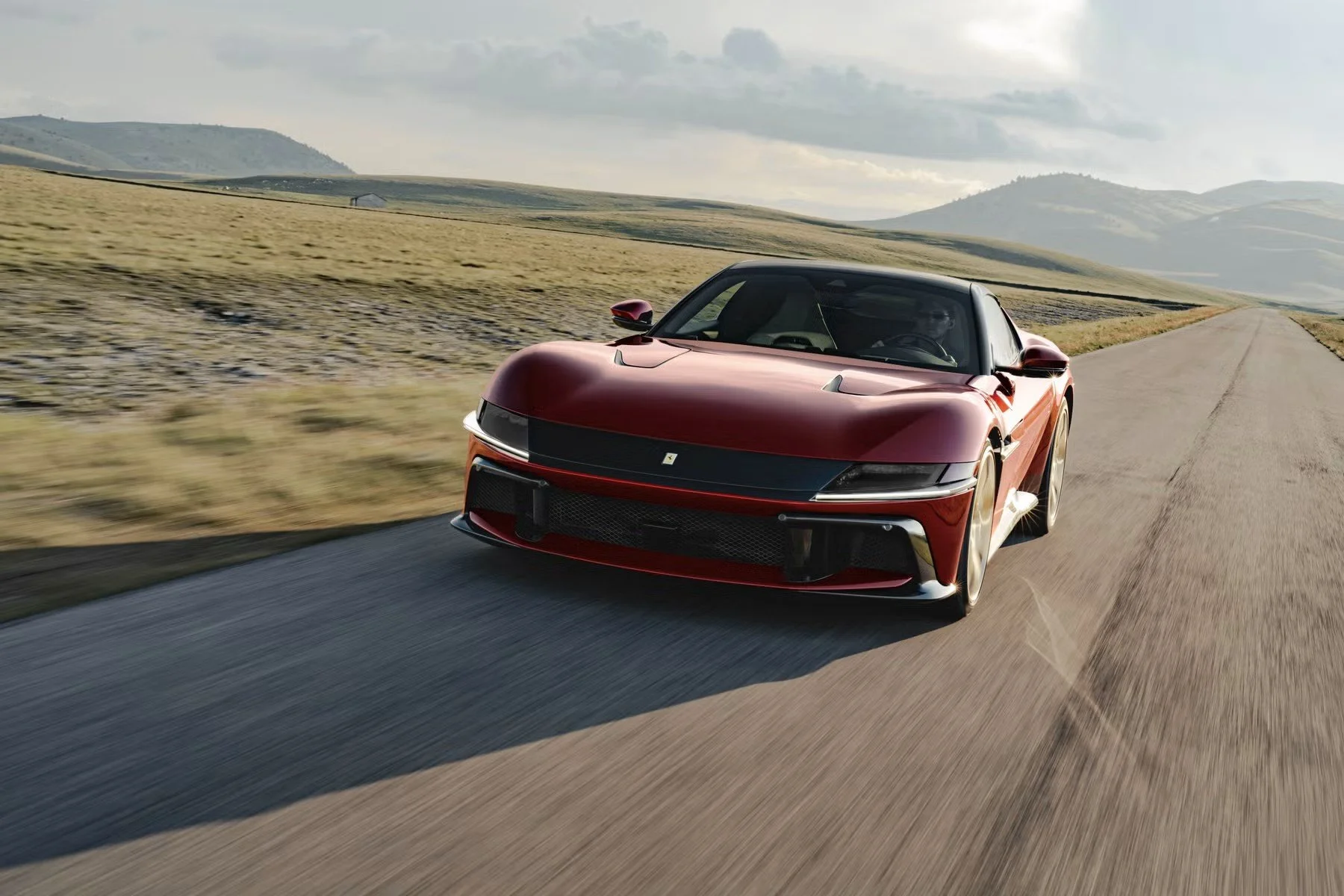
Ferrari 12Cilindri Manuale limited edition has a manual transmission … sort of
Ferrari hasn't produced a car with a proper manual transmission since 2012. From what I can find, the last ones were the California and the 599 GTB Fiorano. Over a decade without a clutch pedal from one of the most famous sports car brands in the world.
Now it sounds like Ferrari is addressing that — sort of — with their new limited-edition 12Cilindri Manuale. I say sort of because from what I've read in the Road & Track article linked here, it still uses an automated dual-clutch transmission. There's a clutch pedal and a gear lever, but it's not a traditional manual in the purist sense.
Which immediately raises the question — why doesn't Ferrari just build a real manual?
The Market Is Telling Them To
Let me give some context on where I'm coming from.
I check AutoTrader occasionally — just to browse and dream a little about what comes after my 370Z. And I always filter for manual transmission. Every time, without fail, the manual option costs more than the automatic equivalent for the same car. Why? Because demand from enthusiasts like me drives the price up. The market is literally pricing in the preference for manual.
And then I came across a Jalopnik article that said younger people are actually choosing manual transmission at higher rates than older generations. That genuinely surprised me. But if it's true — and the data apparently supports it — it just reinforces that demand for manual transmission sports cars is real and growing, not shrinking.
So if the market wants it, and enthusiasts will pay more for it, and younger buyers are increasingly choosing it — why are manufacturers like Ferrari going the pseudo-manual route instead of committing fully?
It Comes Down to Business and Economics
My background is in consumer goods, not automotive. But R&D investment decisions look similar across industries in my experience.
In consumer goods, you're making R&D bets on products that won't hit shelves for another three to five years. My guess is automotive timelines are even longer. And in my time as a marketer with real input into R&D decisions, I've seen the same pattern play out repeatedly — companies consistently choose the safer option.
Think of it this way. You have two R&D investment choices. Option 1: high probability that $1 invested returns $2. Option 2: low probability that $1 invested returns $10 — but also a meaningful chance the return is zero. Which do you choose?
Most big companies — especially ones with as much at stake as Ferrari — choose Option 1. Every time. It's not exciting. But it's predictable. And that's exactly the kind of thinking that produces a clutch pedal attached to a dual-clutch transmission and calls it a manual.
Someone Will Step Up — But It Won't Be Ferrari
I've written recently about the need for car manufacturers to step up the sports car game before we all end up living in an SUV world. And I still believe more than one manufacturer will step up on manual transmission specifically.
Toyota is already leading the way — the GR Yaris, GR Corolla, GR86 and GR Supra all come with proper manual options, and the rumoured Celica or MR2 revival suggests they're doubling down. Honda and BMW both have the heritage to do the same. Subaru consistently delivers for their niche audience. These are the brands giving enthusiasts something real.
Ferrari though? I've given up hope.
I think Ferrari is in the business of selling luxury and the dream of F1 engineering. And that's fine — they're excellent at it. But a dream of F1 engineering is not the same thing as a real sports car for a real driver.
Yeah. I said it. 😂
