Start-Up — The Bae Suzy K-Drama That's Also a Genuinely Good Business Show
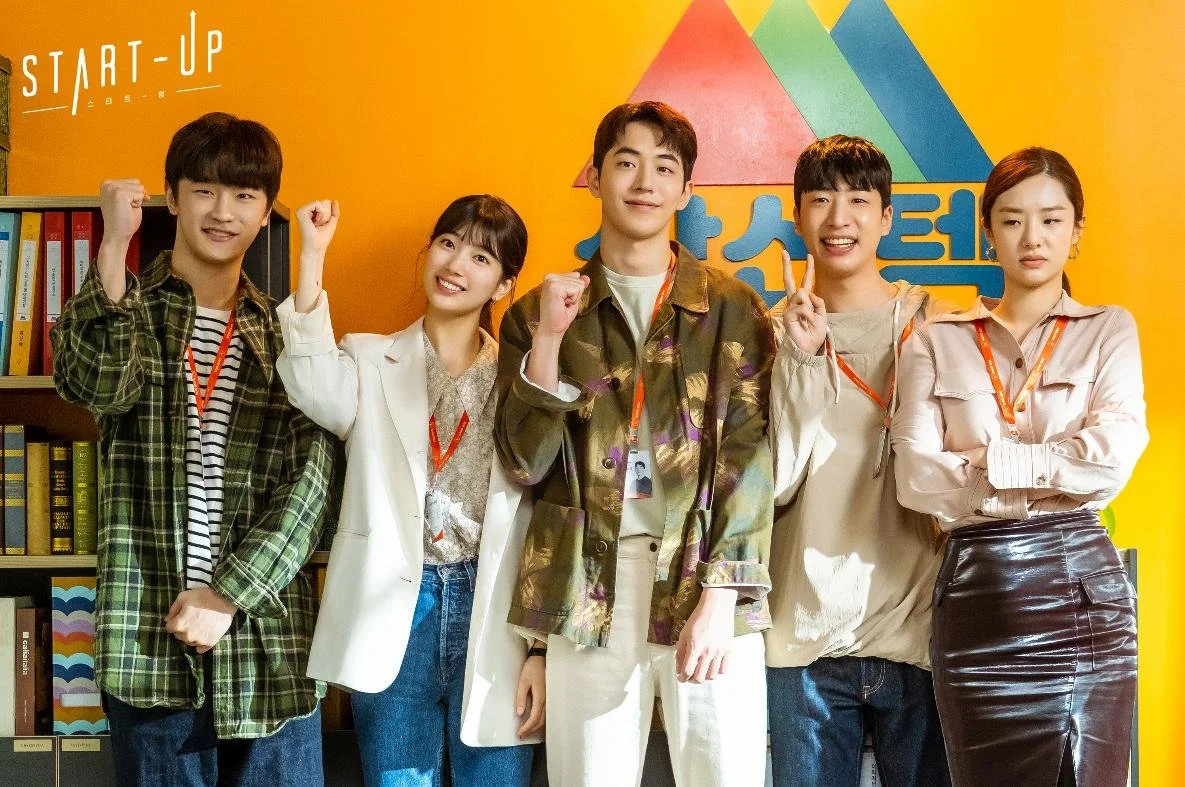
K-Drama Start-Up with Bae Suzy
Spoiler Alert — the following contains spoilers for Start-Up.
As I continue my Bae Suzy binge-watching journey, I think I've finally found the show that goes beyond just her performance and delivers a full ensemble that takes everything to the next level. That show is Start-Up.
The Premise Is Actually Pretty Interesting
I'll try not to go too deep here since I don't want to spoil it for anyone who hasn't watched yet.
The show leverage time jumps, from childhood to adult time. The first follows Bae Suzy's character Seo Dal-mi as a child — she has a mysterious pen pal who helps her navigate her parents' divorce and the difficult years that follow. The second picks up when she's an adult, determined to become an entrepreneur CEO rather than spend her life in a corporate job, and she enters a contest to build a company inside a fictional Silicon Valley-style incubator called Sandbox.
The childhood backstory and how it ripples into the adult love triangle is a classic K-drama trope — but it's executed well here. What genuinely surprised me though was the Sandbox concept itself. From the way the initial contest tests contestants on leadership instincts through word association, to how each episode puts the startup through a new real-world business trial — the show becomes much more than a love triangle.
I've spent my career in business at major consumer goods companies, not in a startup environment, but I found the business challenges in the show both realistic and genuinely interesting. The startup struggles don't just affect the company — they affect families, friendships and individual identities. That breadth is what elevates the show above the typical K-drama structure.
The Ensemble Cast Is What Makes It Great
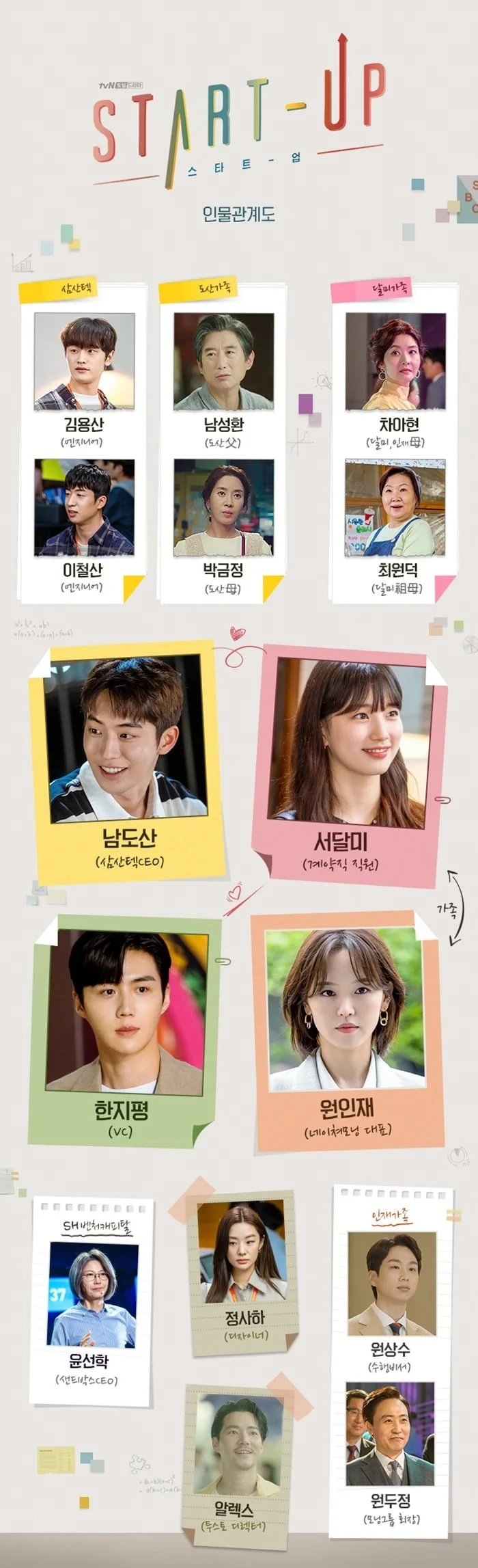
Start-Up has a great ensemble cast
I'll be quick on the love triangle — Bae Suzy, Kim Seon-ho as Han Ji-pyeong and Nam Joo-hyuk as Nam Do-san all deliver. Bae Suzy shines as always. But honestly, the other characters are what pushed this show to another level for me.
Yoo Su-bin as Lee Chul-san and Stephanie Lee as Jeong Sa-ha start out playing familiar archetypes — the tech nerd and the cool girl. But they develop genuine chemistry over time and a secondary love story that feels completely earned. Their relationship also ends up playing crucial roles in key story moments — without them, several important scenes simply wouldn't land the way they do.
Kim Won-hae plays Nam Do-san's father. If you've read my posts on Lovely Runner and While You Were Sleeping, you already know this actor — he appeared in both. He does not disappoint here either. He plays the tough but deeply proud father in a way that serves the story in multiple different directions depending on where you are in the series.
But the most important supporting character in the entire show is Bae Suzy's grandmother, played by Kim Hae-sook. She could have been a standard grandmother trope — and occasionally she is — but her interactions with both male leads and her estranged daughter-in-law elevate her far beyond that. Her storyline plays a genuinely central role in the show, and her declining eyesight becomes the foundation for a business solution that the startup creates. That integration of a personal human story into a business narrative is one of the most elegant things the show does. I thought it was brilliant.
Other supporting characters — Bae Suzy's sister played by Kang Han-na and Seo Yi-sook as the Director of Sandbox — are also far more developed than you'd expect. The whole cast earns its screen time.
The OST and the Mid-Credit Scenes
The OST for Start-Up is genuinely great. Red Velvet's "Future" is the standout track for me, but honestly the whole soundtrack works. As I wrote in my Hospital Playlist post, a great OST can make or break a show — and Start-Up gets this right.
One thing the show does that I haven't seen elsewhere — each episode has a mid-credit scene. Not a post-credit scene at the very end, but shortly after the initial credits roll. These scenes show something that happened during the episode and fill in the background on why certain things occurred. They add context and depth without being essential — you can watch the whole show without them and still follow everything. But they reward attentive viewers who stay with it.
I'll admit — I watched the first three episodes without realizing the mid-credit scenes existed and had to go back. Don't make my mistake.
Final Thought
Next up for me is Doona as I keep working through Bae Suzy's filmography.
Which of her shows do you think is her best? Drop it in the comments — I want to know before I decide what to watch after Doona.
