Sports Cars Don't Just Sell Themselves — They Sell Everything Else
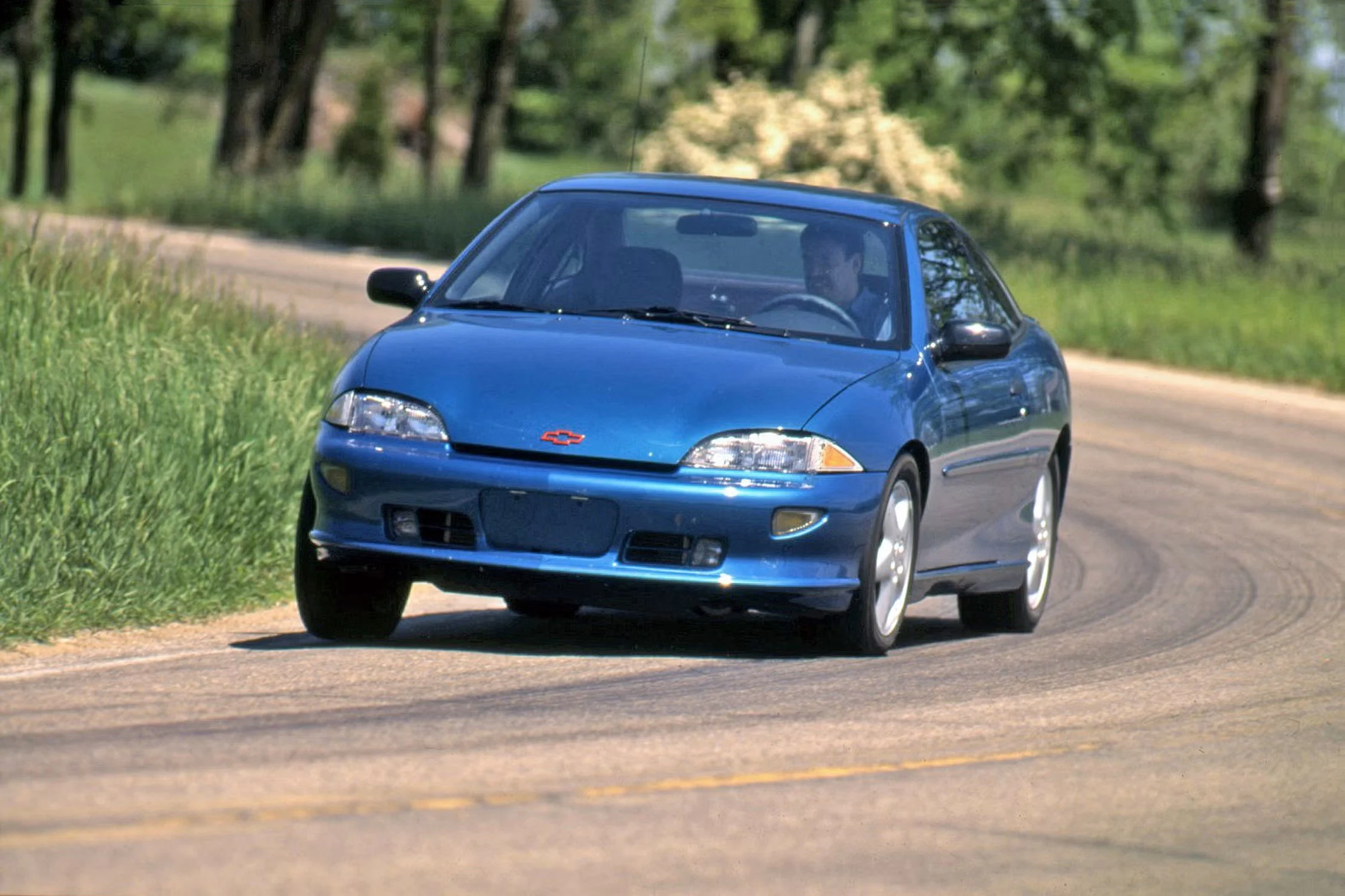
Chevy Cavalier Z24 - though I am into JDM, I still remember this car from the 90s era
I recently read a great article from Road and Track about how car manufacturers have largely stepped back from producing affordable sports cars for the masses — and yes, it comes down to profits.
The article painted a picture of the 90s era that immediately brought back memories. It described a time when affordable performance cars were everywhere — Japanese sport compacts from Honda, Mitsubishi, Nissan and Toyota sitting alongside American offerings like the Ford Probe GT, the Eagle Talon and various high-performance domestic variants. Even Lexus and Infiniti were bringing JDM-derived performance to North American buyers at competitive prices.
That paragraph alone was a time machine.
Beyond the JDM cars, I have specific memories of each of those domestic offerings too. The Ford Probe GT with its distinctly unusual rear end — weird in a way that somehow worked. The Eagle Talon with its turbocharged engine and AWD, especially the cleaner, sleeker second generation. And the Chevrolet Cavalier — a car so embedded in that era that a friend of mine made a joke about it just last week as a throwback to our high school days.
All of that is essentially gone now.
Which got me thinking — and my business background kicked in here. Is it actually true that sports cars are unprofitable? Or is this a classic case of manufacturers failing to build products people genuinely want, while also missing the bigger strategic picture of what a great product does for an entire brand? Because you can't measure the success of a sports car purely by its own sales numbers.
Toyota Is Proving the Halo Effect Works
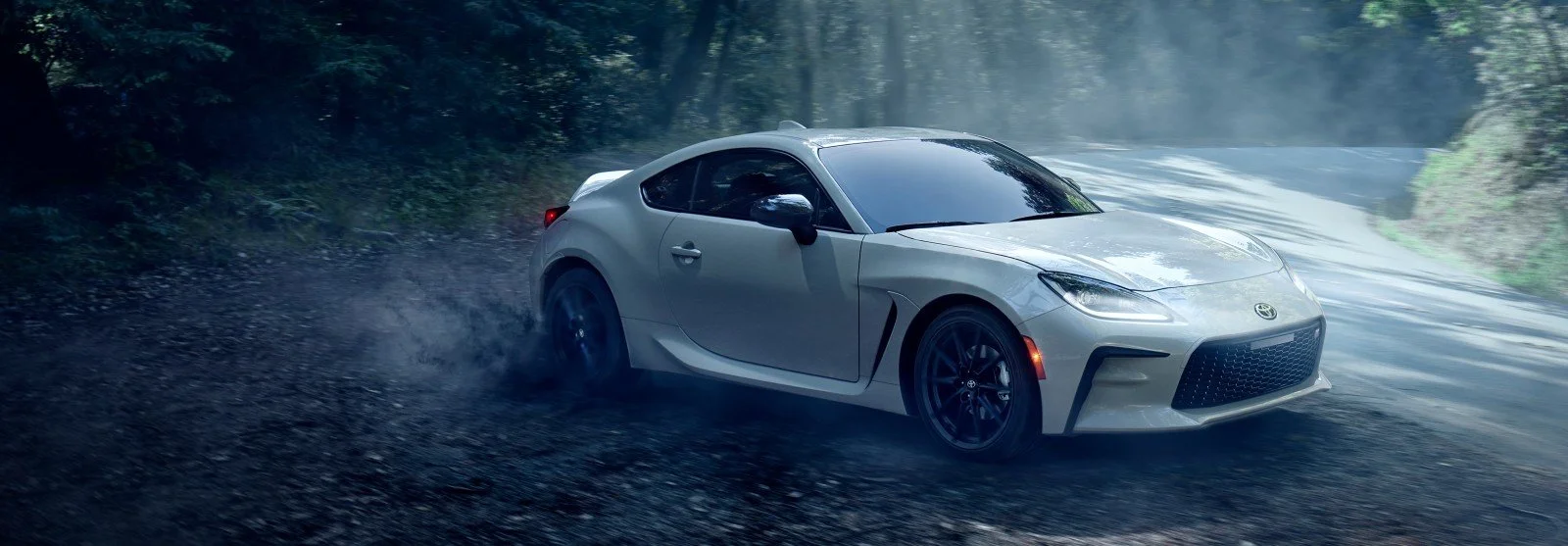
GR86 is a great driving car
Let's start with the manufacturer that's getting this right.
Toyota is still the world's largest automaker by volume — don't let Tesla's market capitalization fool you. And in recent years, Toyota has made a deliberate and sustained push back into the sports car segment.
It started with the Scion FR-S and Toyota 86. Then came the full GR — Gazoo Racing — expansion: the GR86, GR Yaris, GR Corolla and GR Supra. This year Toyota is premiering the GR GT and GTS, though those two sit well beyond mass-market pricing. The GR Supra arguably does too. But the GR86, GR Yaris and GR Corolla remain genuinely accessible — fun, fast and affordable by sports car standards. I've driven the GR86 personally and it's excellent. Everything I've read about the others suggests Toyota is delivering real products, not just badge exercises.
And Toyota is doing well financially — maintaining its position as the world's number one automaker for six consecutive years.
Now Toyota isn't going to outline their brand strategy in an investor report for competitors to read. But the strategy itself isn't new or complicated. Sports cars build brand perception in a way that no SUV ever can. They attract attention, generate enthusiasm, and make people feel something about the entire lineup — not just the car they're looking at.
Toyota's reliability is already baked into their brand at a level that requires no further communication. What isn't inherent — especially as their buyer base gets younger — is what the brand means beyond dependability. Younger consumers don't lie awake worrying about whether their car will start. They want to know if the brand has a soul.
Sports cars answer that question. Even if a young buyer never intends to purchase one, seeing a GR Corolla at a car show or a GR86 in a parking lot reframes Toyota entirely. It's no longer just their parents' car 😂
And there are reports that Toyota is considering bringing back both the Celica and the MR2 — two genuine 90s icons. Though if they come back as EVs only... 😂
Honda Is Trying — But the Strategy Feels Less Clear
You could argue Honda never fully left the sports car conversation. The Civic has always maintained a manual transmission option in North America, and there's always been a performance variant in the lineup — even before the Type R finally arrived in FK8 form in 2017.
For a while the Honda Accord 2.0T with manual transmission was genuinely compelling — a grown-up sports car that made real sense for someone at my stage of life. I seriously considered it. Then Honda dropped the manual option and clean used examples became nearly impossible to find.
The Integra relaunch has been more encouraging. The A-Spec with manual was a good start, and the subsequent Type S — essentially a more refined, grown-up version of the Civic Type R — has received excellent reviews across the board. It's on my personal shortlist, especially given where gas prices are right now.
But then there's the new Prelude. Hybrid only, automatic only, and realistically unlikely to ever get a manual transmission without a significant powertrain rethink. I don't want to be too harsh on it — I love Hondas and I want them to succeed — but compared to Toyota's GR strategy, Honda's overall sports car direction feels less focused and less decisive. Toyota has a clear performance sub-brand with GR. Honda's equivalent feels scattered across multiple models without a unifying identity.
Maybe I'm judging the Prelude launch too harshly. But that's where I am right now.
Who Else Should Be in This Conversation?
Mazda has the MX-5 Miata — one of the purest sports cars available at any price point — but they've left a real gap since the RX-8 was discontinued. A next-generation rotary sports car would be a statement. They haven't made it yet.
Nissan has the Z, which is genuinely good, but they've abandoned the performance Sentra entirely. I actually like the look of the current Sentra — a manual sport variant would be a smart move that I don't think they're considering.
BMW still represents Germany's manual tradition, but the availability of stick shifts is shrinking with every model cycle. VW is in the same position.
There's a rumour circulating that Toyota and Mazda are exploring a collaboration on the next-generation 86, potentially leveraging Mazda's Miata platform expertise. If true, that's an exciting prospect.
But the biggest gap — and the biggest opportunity — is with North American domestic manufacturers.
The argument against them is that muscle car DNA makes it impossible to go back to Probe GT or Cavalier-style sport compacts. I think that's lazy thinking and risk aversion dressed up as brand logic. Every major company tells itself a story about what it can and can't do. Usually that story is more about fear than reality.
The EV pivot hasn't helped. Most major manufacturers over-invested, realized the consumer adoption curve was slower than projected, and have since taken significant write-downs. That capital could have funded exactly the kind of affordable sports car development we're talking about.
GM entered F1 with Cadillac — which is a brand statement, not just a racing program. Their Cadillac CT4-V and CT5-V Blackwing series are genuinely impressive performance cars, but pricing keeps them out of reach for most buyers. Is the F1 move the beginning of a broader sports car strategy? It could be.
Dodge recently launched the new Charger — first as an EV, then pivoting to a twin-turbo V6 with rumours of a V8 variant still to come. That willingness to pivot is encouraging. And Dodge sits under the Stellantis umbrella, which includes European brands with strong manual transmission heritage. I drove a Citroën manual rental in Germany just a few years ago — the culture is still there in those brands. Whether Stellantis can leverage that across their North American portfolio is a different question entirely.
The Bottom Line
Sports cars are not just products. They're brand signals. They tell the world — and more importantly, the next generation of buyers — what a company believes in.
Toyota figured this out. A few others are starting to. The rest are leaving the field open.
JDM enthusiasts have known this for decades. It's good to see the industry slowly catching up.
Which manufacturer do you think is best positioned to lead the sports car revival? And which brand are you most hoping makes a move? Drop it in the comments.
