Should I consider BYD when it comes to Canada?
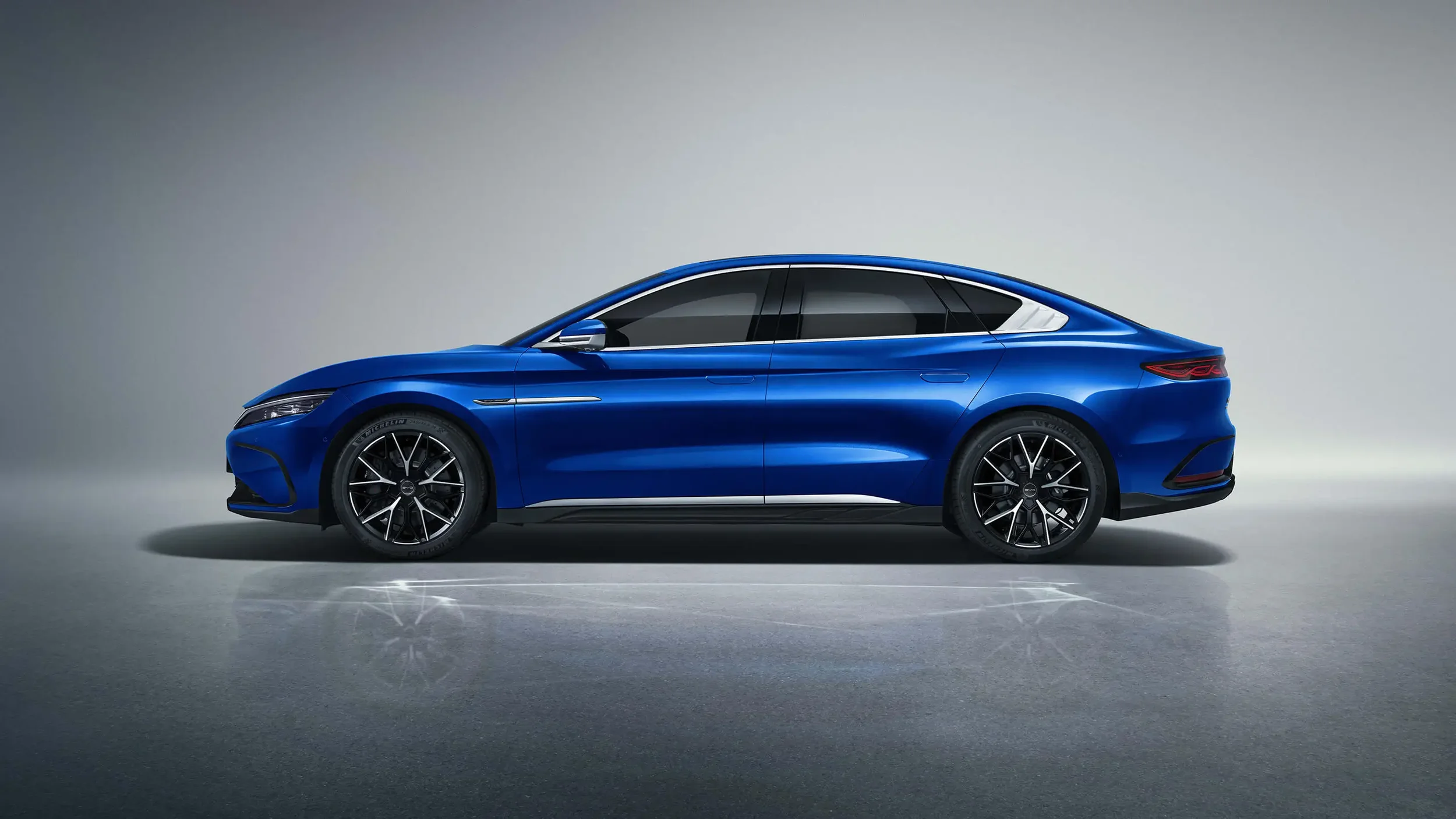
BYD Han Sedan - Honestly, that’s not bad looking
BYD Is Coming to Canada — And I'm Actually Considering It
I've lost count of how many weeks it's been since the Strait of Hormuz closed. What most people notice — myself included — is the gas price. It's come down a bit from the crazy high of $1.80+ per litre, but it's still significantly higher than pre-war levels.
My family currently runs three vehicles. First is my sports car — a 2017 Nissan 370Z in manual transmission 😊 — which is a certified gas guzzler and the only one I drive since nobody else in the family does manual. Second is our 2017 Lexus CT200h hybrid, which is our most-used family vehicle and extraordinarily efficient on gas. The one downside is it's on the smaller side — five people is a squeeze. Third is our 2014 Hyundai Santa Fe XL, six-passenger capacity, which we use for longer trips or whenever we need to move the whole family. But compared to the CT200h, that Santa Fe is a legitimate gas guzzler. The difference in fuel economy has to be at least 3x. It's genuinely painful to fill up right now.
Canada Just Made a Deal to Allow Chinese EVs In at Lower Tariffs
The world moves fast. Not long ago, Canada's relationship with China was strained. But with recent upheaval in global trade dynamics, the Canadian Prime Minister recently struck a deal allowing a certain number of Chinese EVs into Canada at reduced tariffs.
I'm a consumer and a car guy — not an auto industry expert. But I am a business person who knows history. And history is clear: whenever the consumer wins, the broader economy of that country wins too. There may be a period of disruption getting there, but it always plays out that way. Otherwise we'd all still be riding horses.
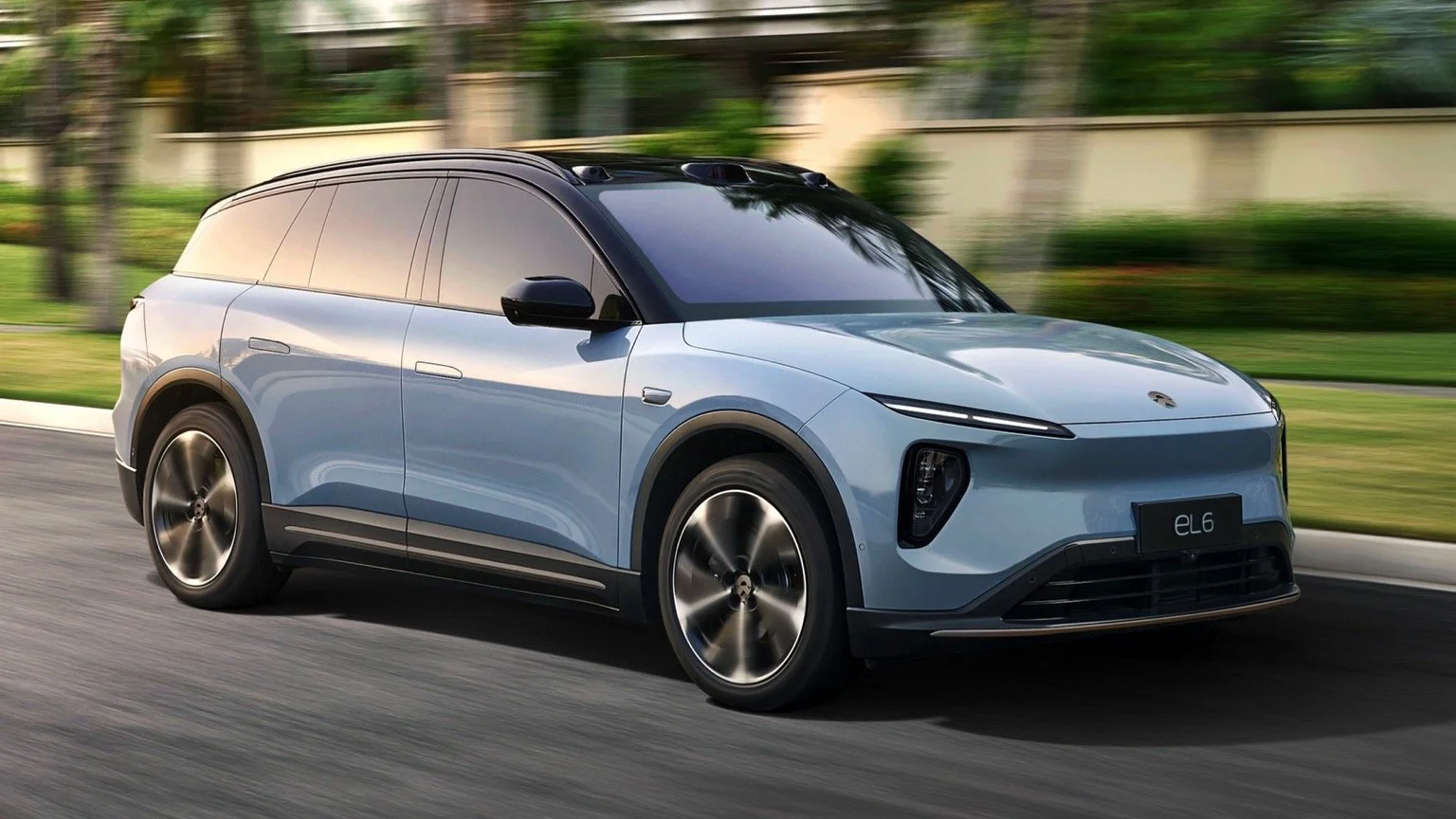
Nio EL6
I've seen Chinese EV brands in person — I noticed them during a trip to Hong Kong a couple of years ago. BYD and Nio were already well established. I even had a colleague who works in Nordic country to join Nio there in a marketing role, and I remember thinking at the time — Chinese EVs are already making serious inroads into Europe. That was years ago.
I live in Ontario, which is one of the most auto-industry-heavy provinces in Canada. Ford, GM, Toyota, Honda — there are plants and parts manufacturers throughout the region. So there's always been natural apprehension about new competitors entering the market. I assumed Chinese EVs were still years, if not decades, away from being available to me as a Canadian consumer.
Apparently not.
My Main Concern With EVs: What Happens After the Warranty
Here's the fundamental difference between ICE (Internal Combustion Engine) vehicles and EVs — ICE vehicles have thousands of moving parts. EVs have far fewer. In theory that's good news: less to maintain, less to go wrong.
But then you hear the battery replacement stories.
I have a close friend who owns a dealership that sells multiple EV product. He's confirmed firsthand that post-warranty battery replacements can run anywhere from $20,000 to $40,000 CAD. The reason it's so expensive isn't just the battery itself — apparently everything connected to the battery is more integrated than most people realize, making replacement far more complex than swapping out a battery.
That genuinely concerns me. What if I spend $50,000+ on an EV, the warranty expires after five years, and the battery fails? With ICE vehicles, the repair ecosystem is deeply established — local mechanics, dealerships, decades of standardized parts and processes. That reliability is worth something real.
So Here's Where BYD Changes the Calculation
The whole equation comes down to three variables: initial purchase cost, ongoing fuel cost, and the risk of a post-warranty battery replacement.
If the purchase price is significantly lower — say $30,000 — the battery replacement risk becomes much less daunting. A manufacturer is unlikely to charge more for a battery replacement than the car originally cost. And the lower initial outlay means less financial exposure overall.
The other factor worth addressing directly: the assumption that Chinese-made products are inferior is outdated. Some people still hold that view, but they haven't been paying attention. iPhones are manufactured in China. So are countless other high-quality tech products. China has specialized in precision manufacturing at scale, and with specialization comes improving quality over time. That's not a controversial observation — it's just what happened.
That said — I want to be clear that a lower price and good manufacturing quality don't automatically equal a good car. A car is far more than what powers the wheels. Ride quality, suspension tuning, steering feel, turning radius — these things are genuinely hard to get right and they matter enormously to the driving experience. Vinfast is a useful example here: the brand has struggled in most markets not because of price or specs on paper, but because people who drive the cars can feel that something is off. When I was shopping for a larger SUV and ended up with the Santa Fe, I test drove several alternatives. Some rides were too soft and bouncy. Others had a turning radius that felt completely wrong for the vehicle size. These details add up — even if you're not looking for a sports car experience.
BYD will need to clear that bar. The price point may get people in the door. The driving experience will determine whether they stay.
Final Thought
I've read that BYD plans to have around 20 dealerships across Canada by the end of 2026. Given that I'm in the Greater Toronto Area, there will almost certainly be one near me. I may not buy one. But I'm genuinely interested in a test drive — at minimum to feel how the car actually drives, and who knows, if the price is compelling enough, it becomes a real consideration. Especially with gas where it is right now.
One thing I will say clearly — no EV will replace my 370Z. It must be manual transmission. That is non-negotiable. Always. 😂
