Happiness (K-Drama Review): A Pandemic Thriller That Goes Much Deeper Than the Virus — By MeiMei
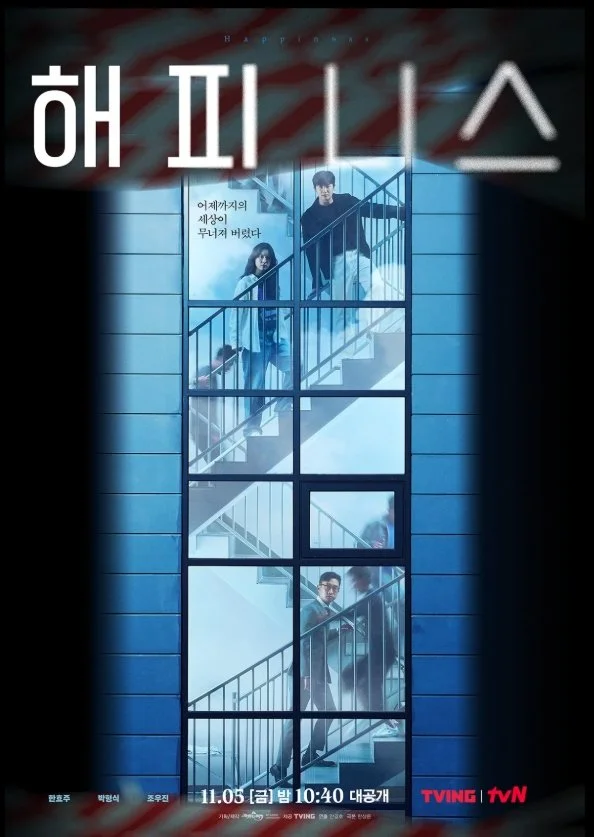
Happiness - Zombie K-drama
MeiMei (my wife 😂) is our resident K-drama and C-drama critic here at Culture. Clothing. Cars. Her reviews are thorough, honest, and clearly labeled for spoilers — so whether you want the quick take or the full deep dive, she's got you covered.
This time she's reviewing Happiness. Take it away, MeiMei.
⭐General Information
Title: Happiness
Region: South Korea
Year: 2021
Genre: Thriller, Action, Psychological, Slow‑Burn Romance
Director: Ahn Gil‑ho
Writer: Han Sang‑woon
Main Cast: Han Hyo‑joo, Park Hyung‑sik, Jo Woo‑jin
Where to Watch: Viki, Netflix (availability varies by region)
⭐ TRIGGER WARNINGS
Blood, infection‑related violence, confinement, panic, neighbor‑on‑neighbor aggression, child endangerment.
This drama deals with fear, survival, and moments of intense emotional and physical danger. If these themes are difficult for you, please take care while watching.
⭐ Spoiler‑Free Review
⭐ Overview
Happiness is a tightly written pandemic thriller that blends tension, social commentary, and a grounded slow‑burn romance. Set inside a newly built apartment complex placed under sudden lockdown, the drama explores how ordinary people react when fear, scarcity, and uncertainty strip away the comforts of everyday life. Some rise to the occasion with compassion and clarity. Others unravel quickly, revealing selfishness, paranoia, or cruelty. The apartment becomes a microcosm of society under pressure, and the show handles this descent with surprising nuance.
At the center of it all are Yoon Sae‑bom and Jung Yi‑hyun, two characters whose steadiness and moral grounding anchor the story. Their relationship is refreshingly mature—built on trust, loyalty, and years of shared history rather than dramatic declarations. The drama doesn’t rely on swoonworthy moments; instead, it shows how love can grow quietly in the spaces between crisis and survival.
The pacing is tight, the tension well‑managed, and the performances—especially from the leads—are compelling. If you’re looking for a drama that combines emotional depth with gripping tension, Happiness delivers. It’s not just about surviving a virus—it’s about choosing who you become when the world closes in.
⭐ Who Will Love This Drama
Viewers who enjoy psychological thrillers with grounded realism
Fans of slow‑burn, emotionally mature romance
Anyone who likes contained settings where tension builds naturally
People who appreciate character‑driven stories about morality under pressure
Those who enjoy pandemic‑themed narratives that feel eerily familiar
⭐ Who Might Want to Skip
Viewers looking for fast‑paced action from start to finish
Fans who prefer overtly romantic dramas with lots of kisses and tropes
Anyone uncomfortable with pandemic themes or virus‑related tension
Those who dislike morally ambiguous characters or slow character unraveling

Happiness K-Drama
⭐ Shoutout to the Cast & Crew
It’s worth acknowledging the extraordinary circumstances under which Happiness was filmed. Production took place in the middle of the COVID‑19 pandemic, and the behind‑the‑scenes stills make it clear how much care, caution, and emotional weight the team carried. Filming a story about a fictional outbreak while living through a real one is no small feat.
What struck me most is how diligently the cast and crew worked despite those conditions. You can feel the real‑world influence in the performances — the tension, the claustrophobia, the emotional fatigue, the small moments of connection. Their dedication shows in every frame. Happiness turned out as well as it did because the people behind it poured so much of themselves into making it real.
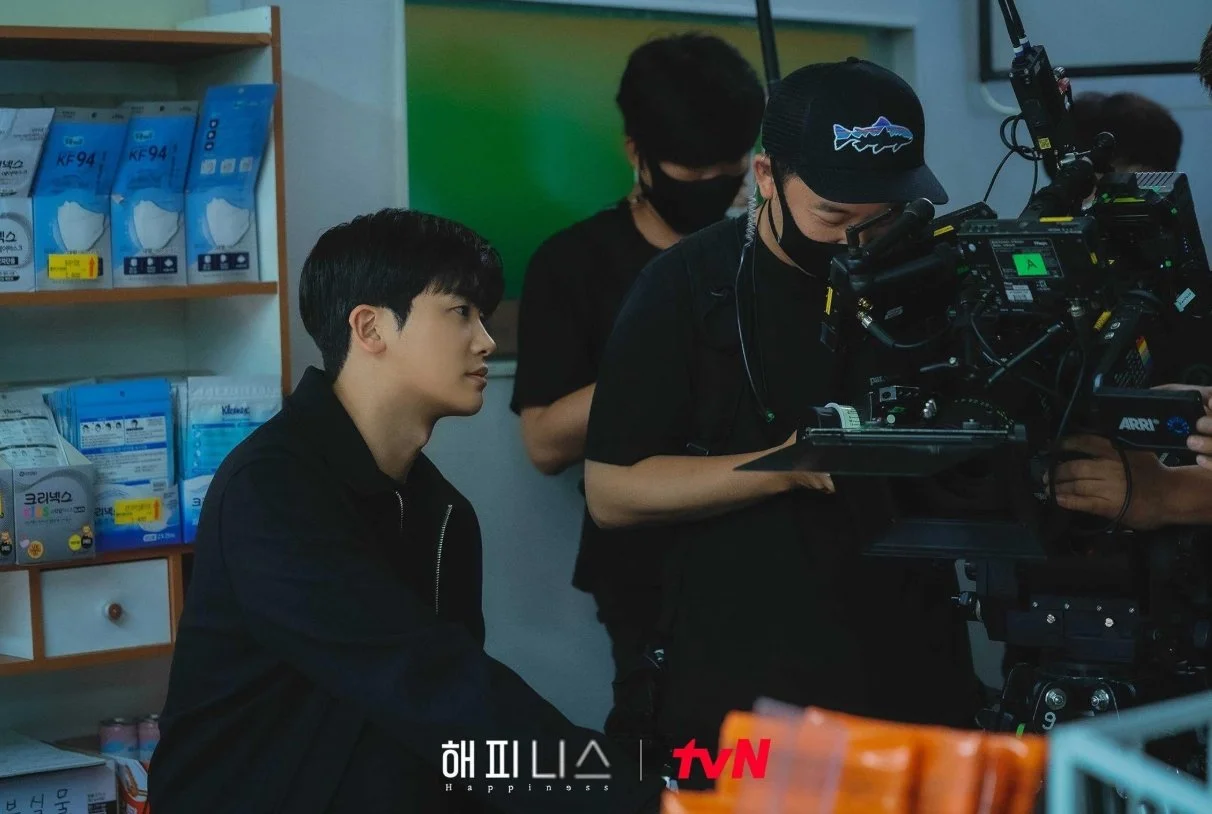
Pandemic protocols in play while filming a pandemic! Amazing!
🌿 Spoiler Deep Dive — Happiness
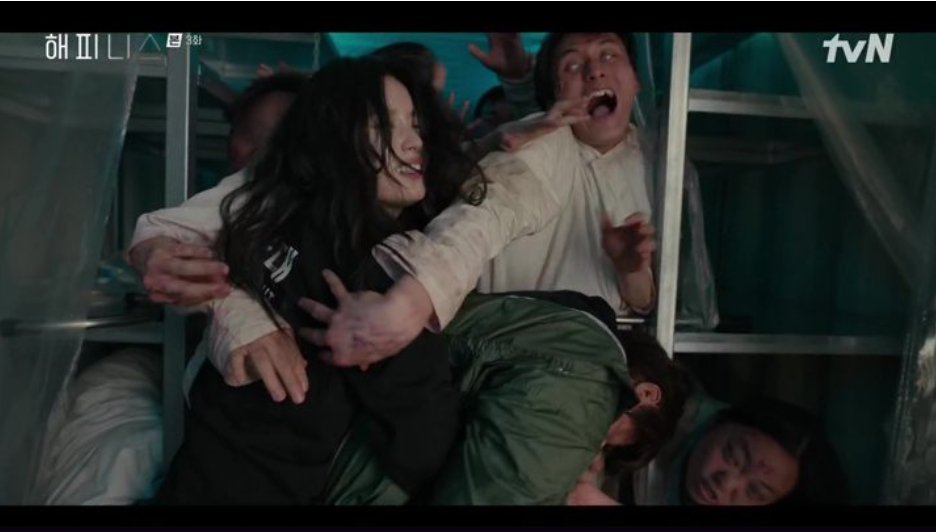
Sae Bom fights her way to save her SOU friend from a government cold-storage containment where they have piled up the overflow of infectees
The title Happiness feels almost absurd for a drama about infection, lockdown, and moral collapse — and that absurdity is intentional. In a world where survival is uncertain and the government treats residents like test subjects, the idea of “happiness” becomes almost laughable. But the drama uses that contradiction to reveal something deeper: every resident in the building is chasing their own version of happiness, and those desires drive the entire story. For the disgraced doctor, happiness means reclaiming the status and wealth he lost, even if he has to kill his wife and eliminate the two people who know the truth. For the older woman, happiness is being elected head of the residents’ association — a dream she clings to even as she loses her husband and her sanity, aligning herself with villains because she believes power will soothe her fear. For the little girl, happiness is simply surviving long enough to get her operation and reunite with her parents; for her mother, the moment of happiness is seeing her daughter safe before the virus finally overtakes her. Others chase greed or fame: the unemployed streamer who wants viral notoriety, the brother who believes he deserves his sister’s apartment. But both eventually learn that their definitions were hollow — that real happiness is being with the people who love you unconditionally. Sae‑bom begins the drama believing happiness is owning an apartment, having stability, securing a future she can control. But the lockdown strips that illusion away. She learns that a house isn’t happiness; it’s the person who shares it with you. Yi‑hyun, meanwhile, never needed to learn this lesson. He knew from the beginning that his happiness was Sae‑bom — being close to her, protecting her, building a life with her. For him, she has always been home. And in a story where everything else is collapsing, that truth becomes the quiet, beating heart of the entire drama.
Once the lockdown begins, the apartment complex becomes a pressure cooker where every resident’s definition of happiness — and every insecurity — is exposed. The descent is immediate. Civility erodes, suspicion spreads, and the building transforms into a modern Lord of the Flies. People who once behaved politely in hallways and elevators begin to unravel the moment scarcity and fear take hold. Some slip into paranoia, hoarding supplies and turning on their neighbors. Others cling to control in increasingly destructive ways. The drama doesn’t portray this as random chaos; it shows a spectrum of human responses to crises. And in that spectrum, Sae‑bom and Yi‑hyun stand out not because they are fearless, but because they refuse to abandon their humanity. It is their moral strength that helps remind the residents that the infected are to be contained, but still treated as human beings with an illness. Yi Hyun and Sae Bom hold on to the belief that they can be cured, a stark contrast to the ruthless neighbors who want to cast them out.
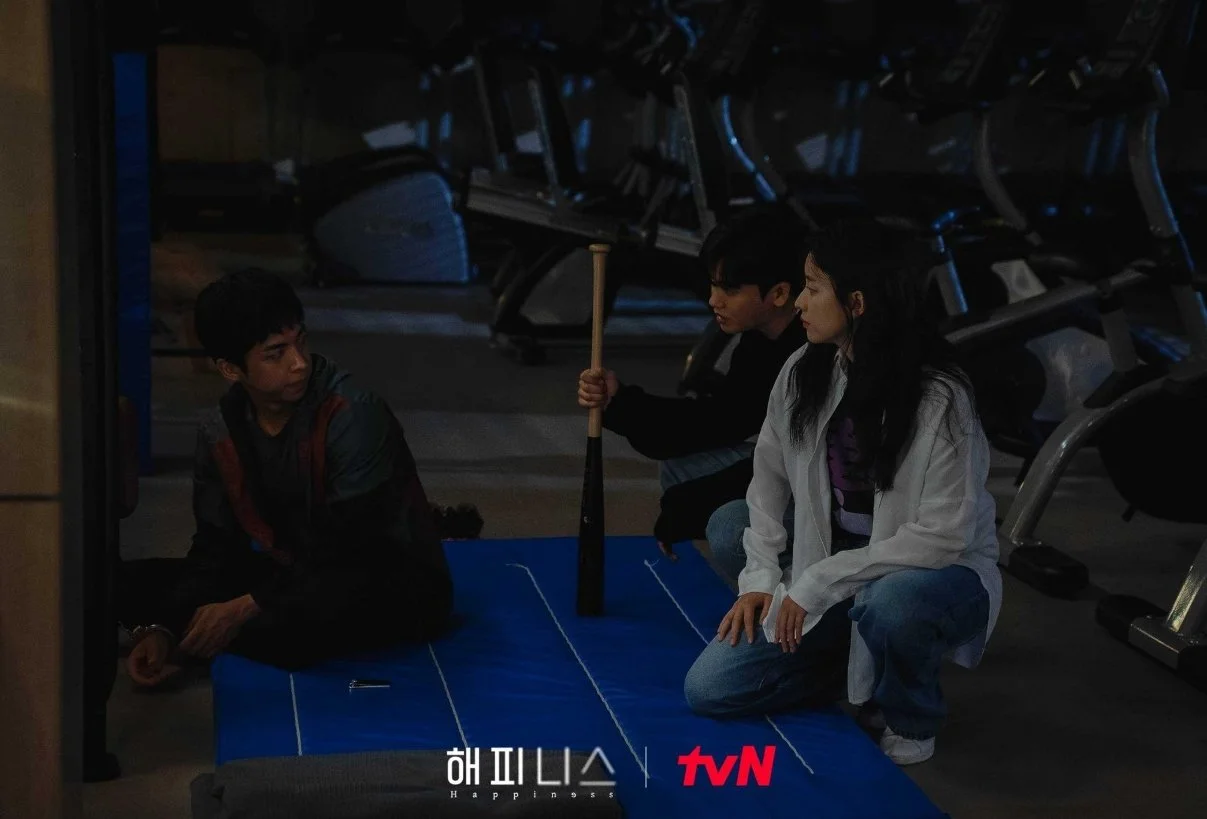
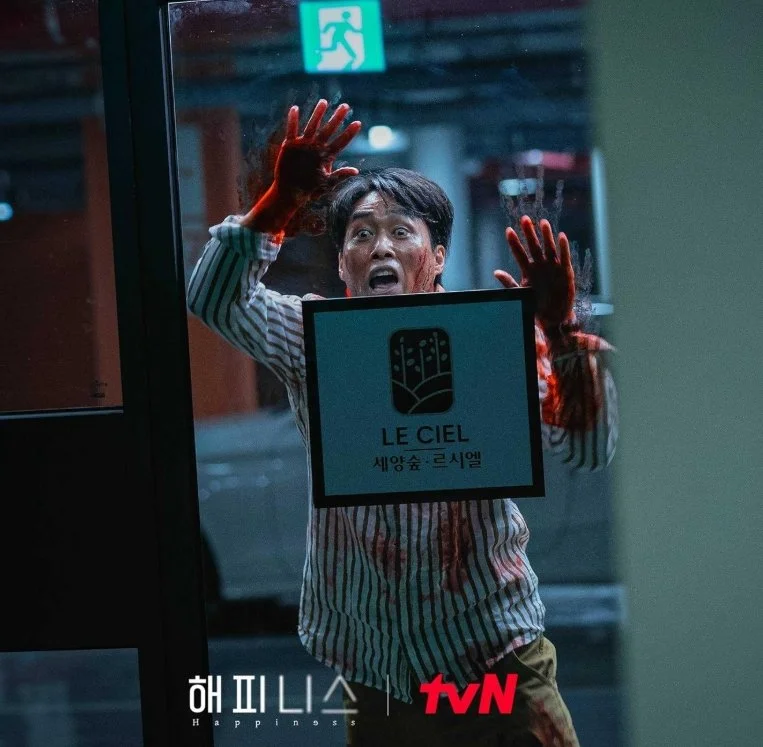
The virus itself is one of the most fascinating elements of the story — not because of its horror, but because of what it reveals. The infection is biological, not moral. It doesn’t reward goodness or punish selfishness. Sae‑bom’s immunity isn’t symbolic; it’s simply how her body responds. The brother’s immunity is the same — he is selfish, insecure, resentful, and yet he never turns. The drama makes it clear: biology determines whether you get infected, but willpower determines how long you stay yourself. And love — connection, grounding, emotional tethering — determines whether you have something worth fighting for. This is why the degree of turning varies so widely. Some people lose themselves quickly because they have nothing anchoring them. Others resist because they have internal boundaries or someone they desperately want to return to. Even the grocery store girl, gentle and lonely, holds on far longer than expected because she longs for a family she never had. And Yi‑hyun… Yi‑hyun holds on because Sae‑bom is the center of his world.
The containment zone itself becomes a social experiment — a microcosm of pandemic psychology. The parallels to COVID‑19 are deliberate: mask‑wearing, panic buying, suspicion toward neighbors, the instinct to quarantine anyone who might pose a threat. But the drama pushes the scenario further. The government’s decision to seal off an entire apartment complex is extreme enough that in reality, people would have rioted. Yet outside the containment zone, life continues as if nothing is wrong. Children play in parks. People gather freely. Society moves on. This contrast forces a painful question: how easily do we accept suffering when it’s happening to someone else?
In the middle of this collapsing microcosm, Sae‑bom and Yi‑hyun become the moral center of the story. Sae‑bom’s strength is instinctive — she reacts quickly, protects fiercely, and refuses to let fear dictate her actions. Her immunity may be biological, but her emotional clarity is something she chooses again and again. Yi‑hyun’s strength is quieter but just as powerful. Long before he’s infected, he is the only resident who consistently checks on every floor, mediates conflicts, and steps into danger because someone has to. When he becomes infected, the virus tests him in a different way. Instead of collapsing into despair or violence, he hides his condition to protect Sae‑bom. He doesn’t want her to worry, or risk herself, or carry the weight of his suffering. Even as the thirst grows, he clings to the parts of himself that matter most. His final act before the finale — choosing to leave Sae‑bom to keep her safe — is the clearest expression of who he is. He isolates himself not out of fear, but out of love.
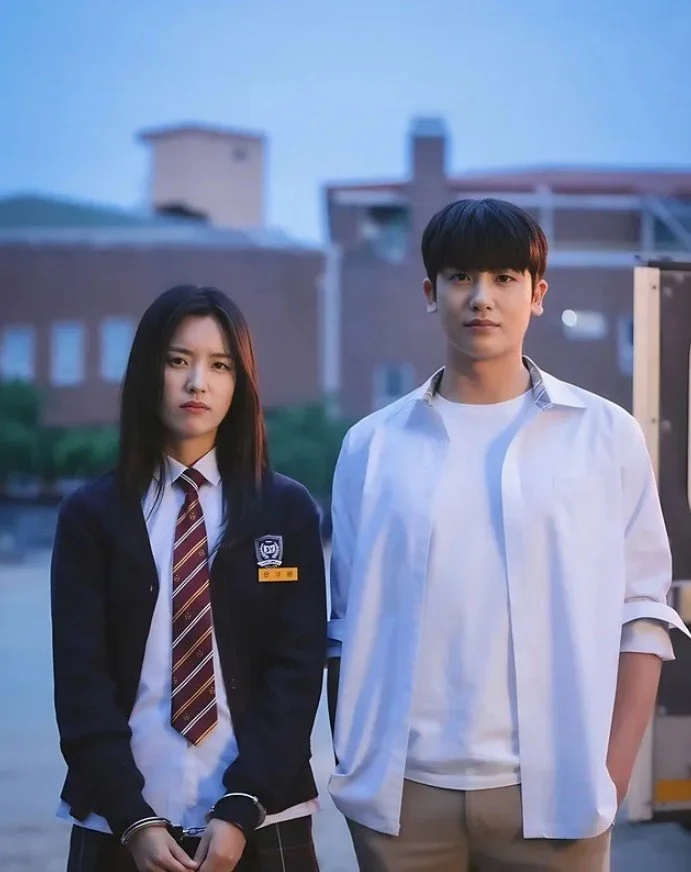
Their romance is one of the most emotionally grounded slow burns in the genre. It’s not built on dramatic declarations or swoonworthy tropes, but on years of friendship, unwavering loyalty, shared values, and the instinct to protect each other. Their high‑school rooftop flashback is one of the most memorable meet‑cutes I’ve seen. Sae‑bom, confident and fearless, pushes Yi‑hyun off the roof to teach him not to fear falling — literally and metaphorically. And when he hits the ground, something shifts. When she asks him to tell the officer she didn’t try to harm him, he doesn’t answer her question. Instead, he blurts out, “Do you want to go out?” It’s impulsive, sincere, and completely him. Even though Sae‑bom never took it seriously, you can tell he meant every word. Cupid’s arrow struck instantly; it just took her a long time to realize it.
It’s one thing to describe this moment - but seeing it makes the emotional shift unmistakable. Watch for his little smile as he falls. That’s how we know he fell for her.
Episodes 11 and 12 form the emotional climax and resolution of the drama. Episode 11 gives us Yi‑hyun’s rooftop monologue — unexpectedly funny, deeply tender, and quietly devastating. When he’s asked whether he’s okay with his wife “running away,” he doesn’t answer with bitterness or fear. Instead, he talks about Sae‑bom with a softness that feels like a confession years in the making. He recalls meeting her on a rooftop on a clear day with blue skies, how he fell in love with her in that moment, and how saying goodbye under the same sky feels strangely fitting. As he lifts his face to the sunlight, eyes closed, the breeze brushing against him, you can feel him holding onto the memory of her — the warmth, the clarity, the echo of her name in his heart. It’s as if he’s letting the last of his humanity rest in that memory before the virus takes over.
Episode 12 moves quickly — almost too quickly — but its emotional beats still land. Yi‑hyun, overwhelmed by thirst, pushes away a potential victim and flees to their apartment. He buries himself under a blanket like a wounded animal trying to protect the world from himself. When Sae‑bom finds him, she doesn’t hesitate. She consoles him, grounds him, and helps him find his way back. He returns to himself within minutes — a feat we haven’t seen from anyone else.
The rest of the finale unfolds in rapid succession: the military arrives for the brother, Andrew spirals into violence, Sae‑bom cuts herself to push him over the edge. Yi‑hyun smells the same blood but doesn’t lose control — a quiet reminder of how strong his will remains. Andrew is taken down, Yi‑hyun cracks one last joke about “good cop, bad cop,” and then collapses in Sae‑bom’s arms. For a moment, the drama lets us believe he has died.
Then — suddenly — we jump one year ahead.
Society is cured. Life is normal. The villains face justice. And Yi‑hyun is alive, living quietly and happily with Sae‑bom. The time jump is abrupt, the resolution rushed, but the emotional core remains intact. In the end, the drama reinforces its central truth: happiness isn’t a place, a cure, or a return to normal. Happiness is the person you return to. Happiness is home.
