Lovely Runner — Finale Reflections. A deep dive into the moments that stayed with me
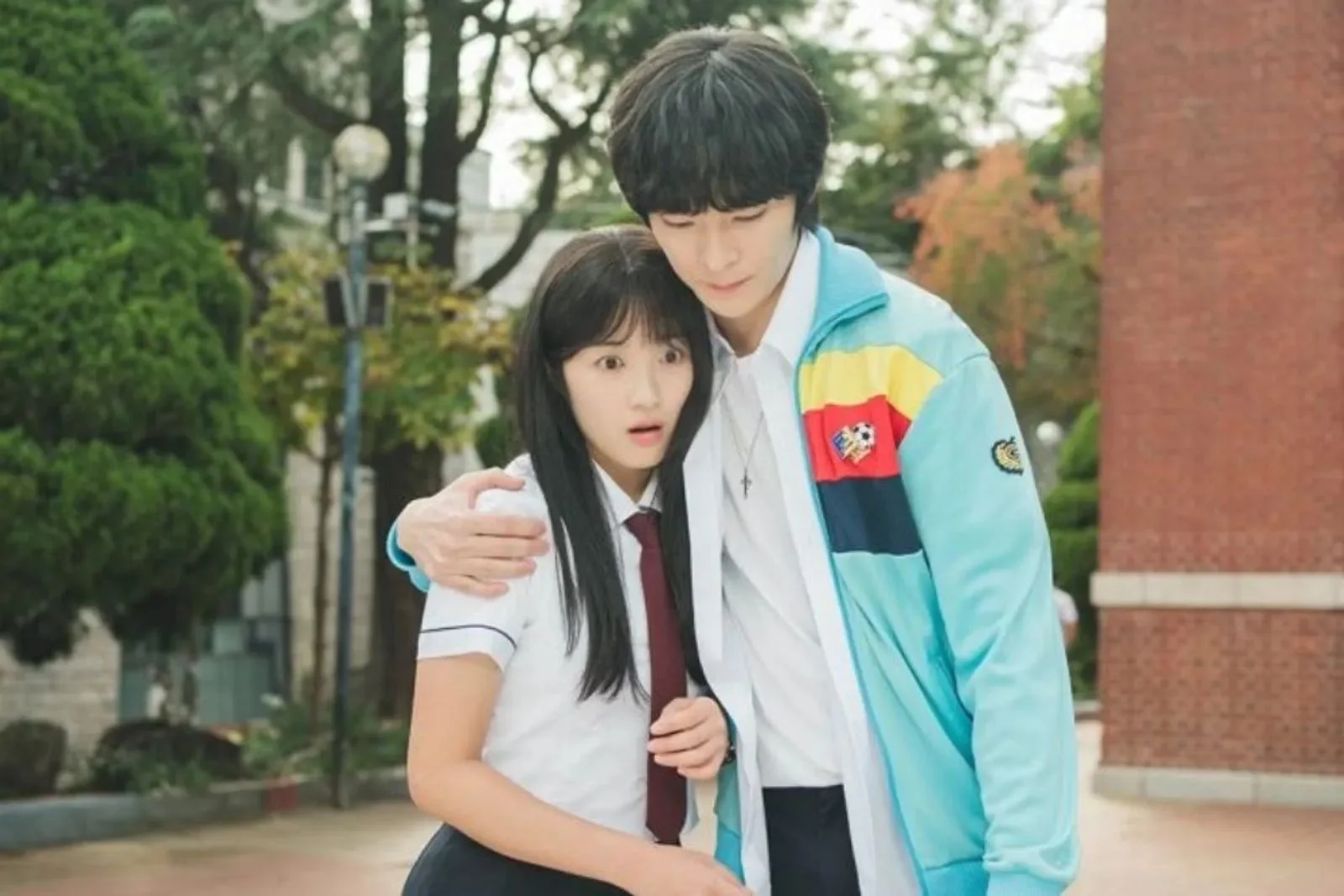
TaeSeong & Im Sol in Lovely Runner
MeiMei (my wife) is our resident K-drama and C-drama critic here at Culture. Clothing. Cars.
This time she's doing a Finale Reflections of one of her favourite show of all time - Lovely Runner. Check out her previous post on overall review here.
Why I wrote this
I wrote all of this simply because it was fun — because I loved Lovely Runner so much that I still have more to say about these characters. They were so rich, so well‑thought‑out, so emotionally layered that I couldn’t help wanting to explore them more deeply. Every timeline, every choice, every small gesture felt intentional. And that’s why the scriptwriters, the director, and the editors deserve so much credit. They didn’t just tell a story; they crafted something intricate and heartfelt, something that holds together beautifully no matter how many times you revisit it.
And of course, the cast fit their roles perfectly. They understood their characters so well that they didn’t feel like they were acting. They became these people. There’s honestly no better compliment than watching a show and forgetting it’s a performance. The characters breathed. The actors made them come alive. And everything about how Lovely Runner was constructed and woven together made it feel complete. It was brilliant — and writing about it has been a joy.
The finale of Lovely Runner is one of the best I’ve ever seen. After all the timelines, all the heartbreak, all the near‑misses and resets, the ending never feels anticlimactic. Instead, every ordinary moment feels earned. Every quiet breath feels like a reward. And every character — not just Sol and Sun Jae — gets the closure they deserve. What I love most is how the finale doesn’t rely on spectacle. It circles back to the small, human moments that were stolen from these characters in every timeline. The show lets them reclaim those moments — and in doing so, it gives us a sense of emotional completion that feels rare and precious.
Tae Seong — loyalty, instinct, and a soul that remembers
Tae Seong’s arc across the timelines is one of the most quietly powerful parts of Lovely Runner, and the finale finally gives him the recognition he deserves. He never needed to be the romantic lead to matter. His importance comes from his loyalty, his instincts, and the way he changes fate simply by being who he is.
In the original timeline, Tae Seong barely knew Im Sol. She was just a childish, overly enthusiastic fangirl he remembered in passing. Nothing about that timeline hinted at the role he would later play.
But in the second jump, when Sol returns to high school for the first time, everything shifts. Tae Seong instantly senses that Sol is different — calmer, older, grounded in a way the “crazy fan” never was. When Sun Jae performs onstage (not Sonaki yet), Tae Seong is up there as a guitarist. He looks at Sol from the stage, thinking she might be there for him… and realizes immediately that she only has eyes for Sun Jae. Her gaze is full of warmth, devotion, and a deep fear for Sun Jae’s future — fear that he might become an idol and suffer the fate she believes awaits him. Tae Seong doesn’t fully understand the depth of what he’s seeing, but he understands enough: Sol is fixated on Sun Jae. She cares deeply. And even if she hasn’t admitted it to herself yet, her heart is already leaning toward him.
In the third jump, during their college days, Tae Seong has matured. He’s graduated, he’s stable, he’s successful, and he still recognizes Sol instantly — the older soul returning again. He flirts with her constantly, but she is amused rather than charmed. She smiles and calls him a flirt, a ladies’ man, but she’s immune to it — because she’s not a teenager anymore. She’s an older Sol in a younger body, someone who can’t be swayed by dimples or sweet words. Instead, she redirects him gently, praises him when he says something insightful, and nudges him toward better choices. She doesn’t flatter him — she challenges him. And he takes her words to heart.
Across the jumps, Sol alters him in subtle but profound ways. Tae Seong stops trying to be a delinquent just to get attention from his father. He begins to understand the worthiness of his father’s career — the sacrifices, the importance of protecting others. And when he learns that Sol was once kidnapped as a teen, he starts to see his father’s actions in a new light. His father wasn’t absent because he didn’t care — he was absent because he was trying to save people. Including Sol. That realization, combined with Sol’s belief in him, is what nudges Tae Seong toward becoming a detective.
Before the Sonaki performance, Tae Seong and Sun Jae have their silly rivalry — flexing muscles, holding buckets of water over their heads to impress Sol’s mom. It’s boyish posturing, harmless and funny. But afterward, Tae Seong drops the act completely. He speaks to Sun Jae with a bluntness that only someone emotionally intelligent could muster. He basically tells him that he’s blind to Sol’s feelings, that there’s no reason to be jealous, and that Sol came to him — Tae Seong — because she was terrified something terrible would happen to Sun Jae. It’s such a Tae Seong moment: perceptive, slightly irritated, and completely sincere. He sees what Sun Jae can’t see yet — that everything Sol does is for him.
Later, when Sun Jae sings Sonaki onstage — the song he wrote for Sol, the song she cherished in the future — Tae Seong watches her from behind. And this time, there is no ambiguity. Sol and Sun Jae are already dating. She knows she loves him. He knows he loves her. Tae Seong sees the depth of that love in her eyes, and he knows with absolute clarity that he never stood a chance. He wasn’t beat. It’s just that there was never anyone else for Sol than Sun Jae.
The fourth jump complicates things, because Sol resets everything to a point before the yellow umbrella moment. She moves early, avoids the villain, avoids Sun Jae, and eventually returns to the future. We’re left to assume she only spent a few months in the past — and yet Tae Seong still grows into the man he becomes. The gradual, believable evolution we saw in the first three jumps is suddenly compressed into a single altered timeline. It doesn’t fully add up logically… unless we accept the emotional truth the show keeps hinting at: maybe his soul remembers. Maybe the imprint Sol left on him — her belief, her guidance, her influence — lingers even when the timelines reset. Maybe the version of Tae Seong we see in the finale is the sum of every timeline, every nudge, every moment of growth he experienced across realities.
In the current timeline, Tae Seong finally witnesses Sol’s grief — and it is one of the most quietly devastating scenes in the entire drama. After they drink together, Tae Seong carries her on his back, thinking she’s simply drunk and sleepy. But when he sets her down, the snow begins to fall, and Sol opens her eyes. She stares upward into the softly falling flakes, and memories flood her — Sun Jae under the yellow umbrella, Sun Jae’s youthful confession, the soul‑searing kiss in his apartment, the tender moment at In Hyuk’s family home when he answered her “I like you” with “Sol, I love you.” All the moments she lost. All the moments she remembers alone.
She breaks.
The snow falls relentlessly, like her tears. Tae Seong is startled — this is not drunken rambling, this is grief surfacing from the deepest part of her soul. He raises a hand to shield her face from the snow, but it’s not enough. He can’t stop the snow, and he can’t stop her pain. All he can do is stay beside her. “Sun Jae,” she cries. “Sun Jae… I miss you.” Tae Seong witnesses this quietly, without jealousy, without resentment, without any trace of bitterness. He simply shelters her as best he can, holding back the snow with his hand, staying with her through the storm of her heartbreak.
And in this moment, he understands everything. He understands the emptiness in her heart. He understands the depth of her longing. He understands that her love for Sun Jae is soul‑deep. And he understands that nothing he feels for her could ever compare to what she feels for Sun Jae. That’s why, later, when Sun Jae returns and Sol is whole again — when her heart is full instead of aching — Tae Seong recognizes it instantly. He sees the difference. He sees her healed. And he is happy for her.
That’s why his scene in the finale — sitting with his father after stopping the villain — is so powerful. Tae Seong carries the weight of taking a life, and his father helps him understand that sometimes a death means someone else gets to live. Tae Seong refuses to call the villain “evil,” because he sees him as a person who made terrible choices, not a supernatural force. It aligns with the truth I believe: bad things happen to good people for no rhyme or reason. The villain was just an example of that. And then the full‑circle moment with Sun Jae — the drunken honesty, the awkward gratitude, the relief in Sun Jae’s eyes when he realizes Tae Seong never dated Sol in this timeline — is funny, sweet, and so them. They can only be honest when they’re a little drunk, and it’s adorable.
Tae Seong is one of the best second male leads I’ve ever seen — not because he’s tragic, but because he’s good. Loyal. Strong. Supportive. And someone who steps back the moment he sees his friend finally happy.
Family moments — gentle, funny, and full of warmth
The family dynamics in the finale were so gentle and consistent with who these characters have always been. Im Sol’s mom and Sun Jae’s dad are fiercely proud of their children, and their bickering over who raised the better catch is hilarious. The reveal at the baby’s birthday party is chaotic and perfect. What I loved most was Sun Jae’s dad peeking through the door and watching his son. He sees Sun Jae’s bright eyes, his genuine smile — not the actor smile he gives the world, but the real one. The one he hasn’t seen in years. Maybe not since his swimming days. Maybe because this version of Sun Jae never grew up with his first love, Im Sol. But here, he sees the light return to his son’s face. He understands instantly why Sun Jae loves Sol, and why she’s good for him. All the petty bickering melts away in the face of that happiness. It’s such a simple moment, but it says everything.
Im Sol & Sun Jae — love that returns to its quiet, destined places
The comedic moments in the finale were so on point. Sun Jae trying to stage an overly dramatic proposal was heart‑warming and funny, especially because we could see it wouldn’t go well. It echoed the past timeline — the teenage confession with fake petals sprinkled from the roof — and showed how fate loops back in playful ways. But Sun Jae’s perfect moment was never meant to be showy. It was always meant to be quiet. A walk under cherry blossoms. A petal caught in the wind. A wish whispered between two people who have loved each other across timelines. Their past recircles again to that moment — an image of their youth, of their cherished past, of a love that was vibrant then and vibrant now. A promise of a love everlasting.
And the boat scene is where Sun Jae’s maturity shines. He wants to propose, but he sees something in Sol’s eyes — the desire to finally live her own life. Sol jumped timelines, but the only life she truly lived was the one where she was paralyzed. In this timeline, she arrived in a future she didn’t grow into. She never got to pursue her dream step by step. Directing isn’t just a career move — it’s her reclaiming her life. Sun Jae understands this. So he steps back. Not out of doubt, but out of love. He waits — but never far. He misses her — but never demands. His devotion is quiet, steady, and deeply earned. After everything they’ve endured, their love feels mature, grounded, and beautifully human.
A future finally allowed to unfold
The way Lovely Runner ends, with that soft glimpse of their wedding day, says so much about the heart of this show. After watching Sol and Sun Jae get trapped in tragedy after tragedy, stuck in loops of loss and timelines that kept pulling them backward, we finally get to see them move forward. It’s the first time the story allows us to imagine a future for them that isn’t borrowed or fragile or dependent on another reset. It’s simply theirs.
That final moment feels like a breath the entire drama has been holding. It tells us that the tragedy has truly ended. There will be no more jumping to the past, no more rewriting history, no more erasing memories or sacrificing pieces of themselves to save each other. Instead, we’re given a quiet, joyful assurance that their lives will finally unfold the way they were always meant to. And that little sneak‑peek of their wedding — bright, warm, and full of promise — feels like the perfect closing note. It’s a glimpse into a beautiful future they fought so hard to reach, and one they can finally live without fear.
