From True Detective to K-Drama: How TV Became Too Good to Keep Up With
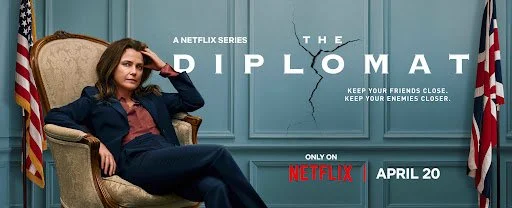
The Diplomat with Keri Russel
People say we're living in the golden age of TV. I think that's completely true.
I was one of the early cord cutters — I haven't had cable TV for over 20 years. So I was already used to watching beyond the standard cable lineup. But even by that standard, the quality and variety of TV shows has exploded in the last decade in a way that genuinely surprised me.
Most people credit streaming services like Netflix — and fairly so. They freed showrunners from the constraints of commercial breaks and rigid 30 or 60 minute time slots. HBO showed what was possible with The Sopranos and Game of Thrones long before streaming took over.
But I think what really drove the golden age was something harder to manufacture — a confluence of diverse creativity and talent that somehow all arrived at once.
It Started With Movie Actors Coming to TV
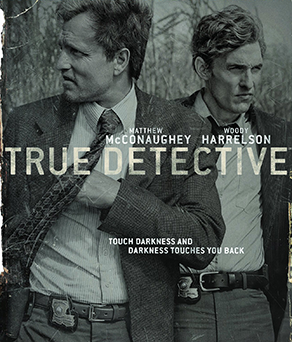
True Detective Season 1 with Matthew McConaughey & Woody Harrelson
True Detective — starring Matthew McConaughey and Woody Harrelson — is the first show I can clearly remember that brought genuine movie-calibre acting to a TV lead role. And it was a massive deal.
Not just because the show was suspenseful and deeply engrossing. Not just because fan theories exploded online after every episode. But because those two actors — names we associated exclusively with film — chose television and treated it with the same seriousness as any major movie role.
Who can forget McConaughey's single-take combat scene — something essentially unheard of on TV at the time — or his police interrogation monologue that had fans dissecting every word for hidden meaning? That show permanently raised the bar for what TV could be.
After that, the floodgates opened. Big Little Lies brought Nicole Kidman and Reese Witherspoon. Westworld had Anthony Hopkins and Ed Harris. Homecoming starred Julia Roberts in a role that's genuinely difficult to describe without spoiling anything.
Then came Squid Game — which featured actors already known from major Korean film roles, including Lee Jung-jae and Lee Byung-hun. But beyond the casting, Squid Game became the inflection point for what's known as Hallyu — the Korean Wave — the global rise of South Korean pop culture, entertainment, music, dramas and film. The shift has been remarkable. Watch BLACKPINK from 2021 compared to now and you can feel how much the cultural reach has expanded.
From True Detective onward, A-list talent on the small screen stopped being the exception and became the expectation.
Then Came the Diversity of Creativity
Whether driven by streaming platforms, HBO's legacy, or simply a creative moment that can't be fully explained — the variety of TV storytelling became genuinely remarkable.
For decades, TV lived in predictable buckets. Sitcoms like Friends, How I Met Your Mother, The Big Bang Theory. Reality shows like Survivor, America's Next Top Model, American Idol. Procedural cop and crime dramas. That was largely it.
Then TV got weird. And weird turned out to be exactly what we needed.
Breaking Bad — a chemistry teacher becomes a drug kingpin. Homeland — a POW returns home as a double agent. Orange Is the New Black — life inside an all-female prison told through an enormous ensemble cast. Stranger Things — a group of 80s kids battling supernatural evil. Homecoming — Julia Roberts in something so structurally unusual it defies easy description.
Documentaries had their own wave too. Sports — The Last Dance remains one of my personal favourites given my love of basketball, and F1: Drive to Survive brought a whole new audience to Formula 1. True crime — Making a Murderer genuinely had me unsettled for days. Biography — OJ: Made in America is as close to essential viewing as a documentary gets.
Then came the international shows — and it wasn't just K-Drama leading the charge, though they certainly helped.
Prime Video's Modern Love started as a Western English-language series and expanded globally — producing episodes set in Mumbai, Hyderabad, Chennai and Tokyo. Netflix's Money Heist from Spain had a theme song so infectious I talked about it with my team constantly — until one team member, a cellist, learned to play it and performed it live in a team meeting. The whole room lost it 😂. And then there's Dark — a German time travel series so logically airtight that I genuinely could not find a flaw in its timeline. It features the line: "Yesterday, today and tomorrow are not consecutive — they are connected in a never-ending circle. Everything is connected." That line still sits with me.
What I find fascinating is how international TV has started influencing film in return. The growing representation of East Asian culture — from Turn Red to K-Pop Demon Hunters — reflects an audience that was always there, finally being seen. Both films have become favourites for my daughters. And then there's Shang-Chi — one of my favourite MCU films — which featured Hong Kong legendary actor Tony Leung as the main villain. If you've read my Infernal Affairs post you already know how I feel about Tony Leung. He brought a quiet intensity to that role that elevated the entire film.
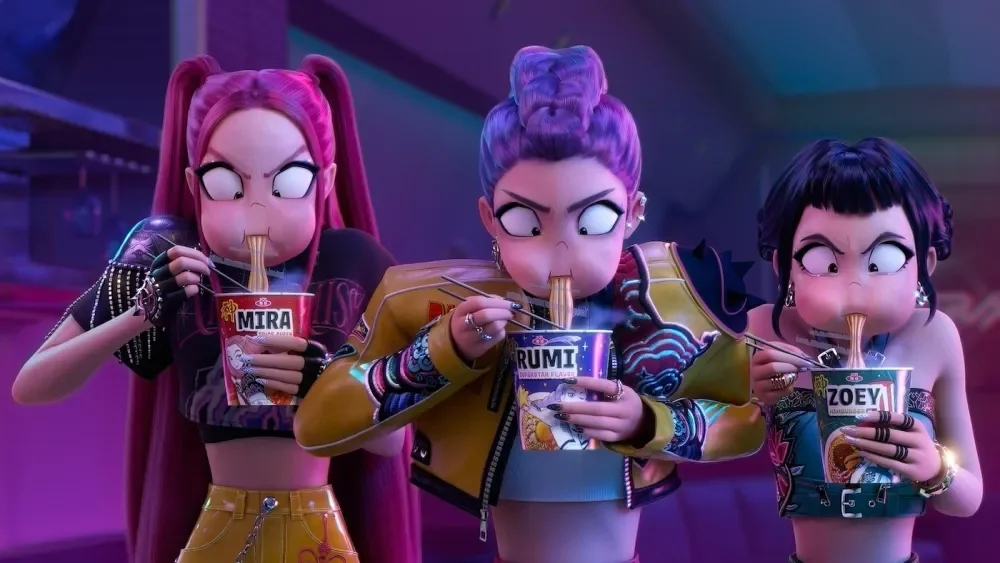
K-Pop Demon Hunters - scene from them quickly slurpin’ instant cup noodles
The Problem Now: There Are Too Many Great Shows
This is the restaurant with too many items on the menu problem.
We are at peak Golden Age of TV, and not a week goes by without someone recommending a show — and the recommendation is almost always right. Recently the Canadian series Heated Rivalry has been generating serious buzz, and honestly it's sitting on my list while I'm still working through everything before it.
My personal taste leans toward shows where I genuinely cannot predict the ending. Too many shows are telegraphed — even good ones. So I gravitate toward suspense and thriller, where the uncertainty is the point.
Here are the shows I've watched recently that kept me guessing every single episode:
The Diplomat — Keri Russell is extraordinary in this. I should have mentioned The Americans earlier as another example of her brilliance, but The Diplomat is its own thing entirely. I have tried repeatedly to predict where the story goes. I cannot.
Shrinking — Jason Segel, who played one of my all-time favourite TV characters in Marshall from How I Met Your Mother, alongside Harrison Ford. It walks the line between drama and comedy better than almost anything I've seen. There were moments I genuinely laughed out loud — not polite laughter, actual laughter.
When Life Gives You Tangerines — A K-Drama starring IU and Park Bo-gum, telling a multi-generational story with real emotional stakes. I thought I knew where it was going multiple times. I was wrong every time. It doesn't shy away from how harsh life can be — but it balances that with genuine warmth and joy.
And right now I'm working my way through The Pitt Season 2 — think Kiefer Sutherland's 24 in terms of format and tension, but set entirely in an emergency room. It looks extraordinarily real, the twists feel earned rather than manufactured, and I have no idea where it ends up. Exactly how I like it.
What show are you watching right now? And the real question — how are you actually finding the time? 😂
